

Last week, True North Advisors unveiled the first Scotland-wide political poll of 2026.
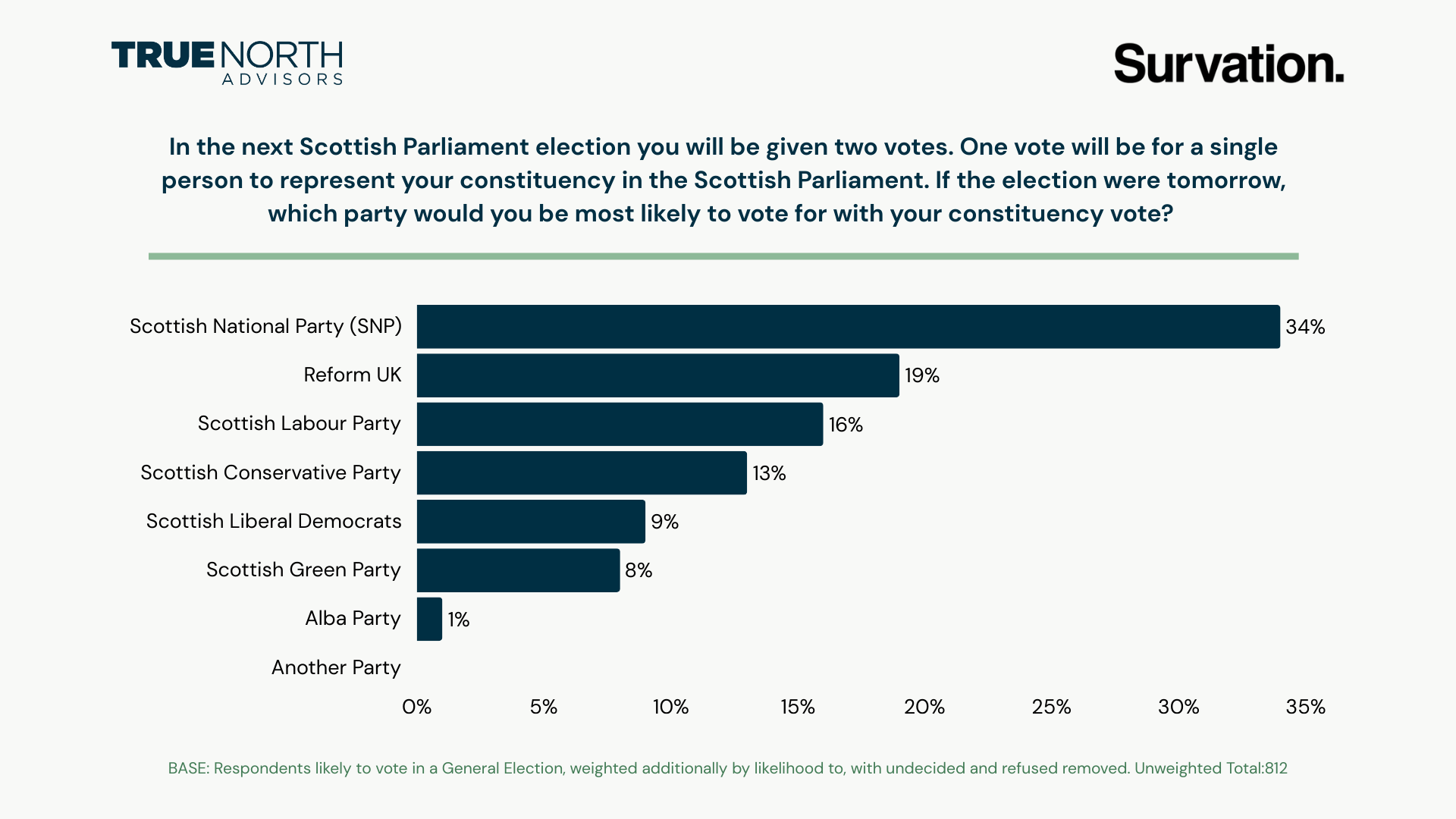
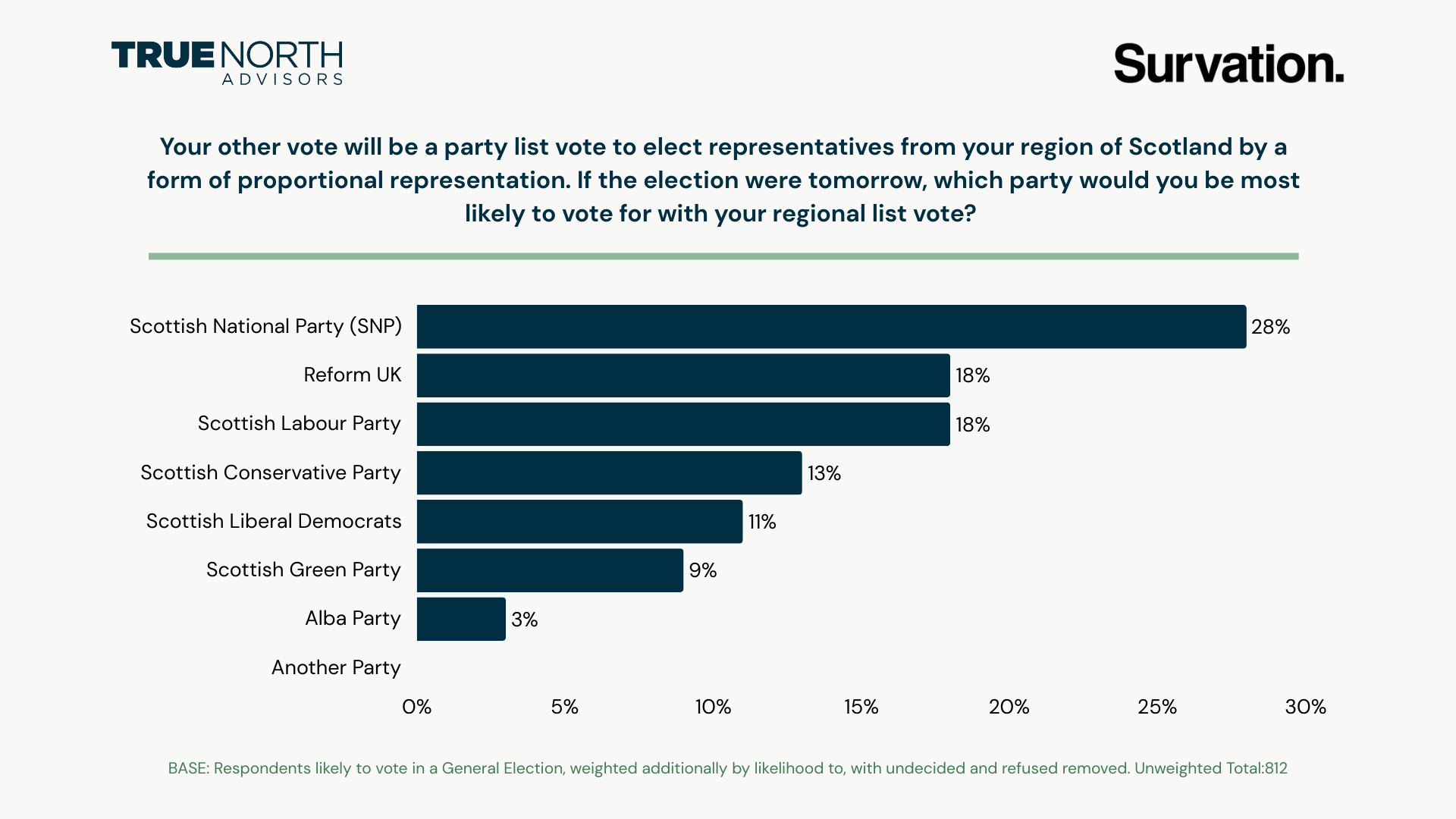
Conducted by Survation, it revealed that the SNP remains on course to be the largest party at Holyrood, but is unlikely to secure an outright majority. On current numbers, John Swinney’s party is polling at 34 per cent in constituencies and 28 per cent on the regional list, translating into a projected 61 seats. While this would comfortably leave the SNP as the largest party, it underlines the continued difficulty John Swinney faces in converting vote share into a governing majority.
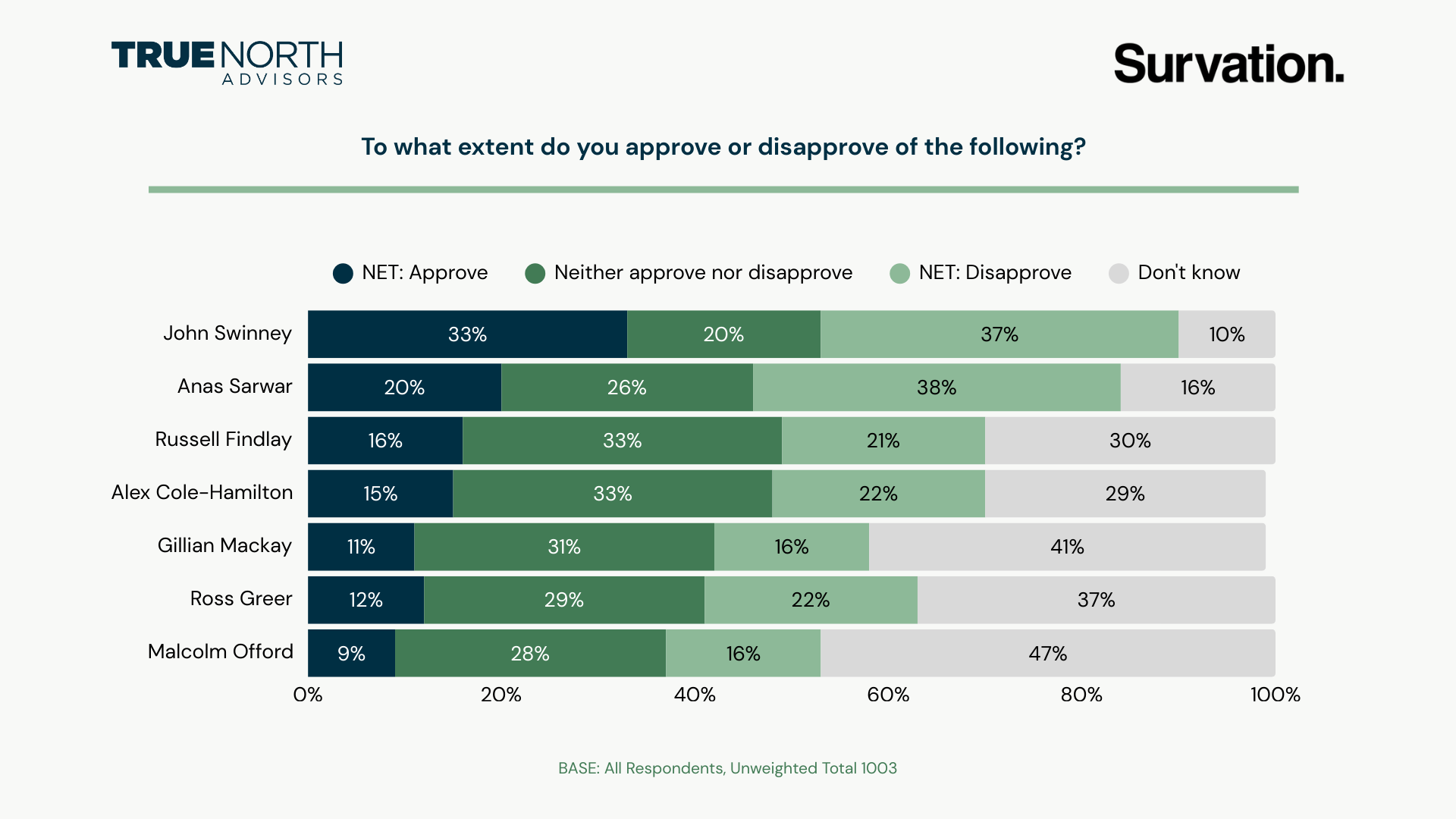
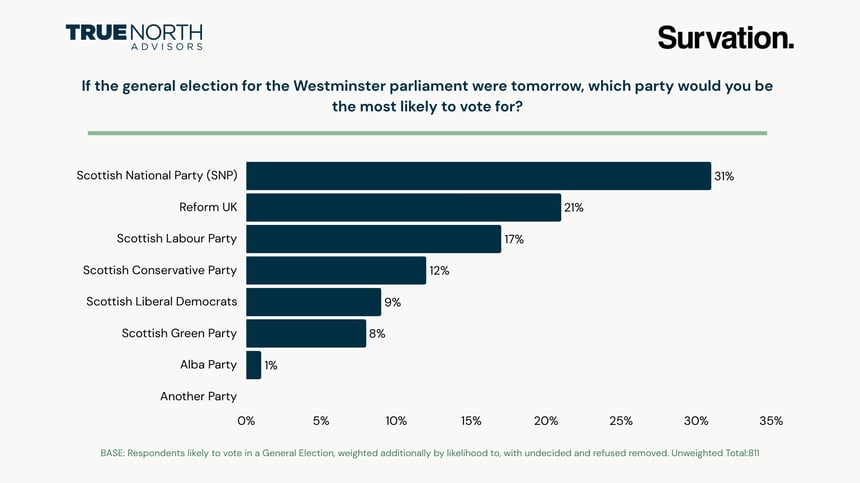
Behind the SNP, the battle for second place is finely balanced, with Reform UK continuing to disrupt Scottish politics. Under new leader Malcolm Offord, the insurgent party is now neck-and-neck with Scottish Labour, polling at 19 per cent to Labour’s 16 per cent in constituencies, and tied at 18 per cent on the regional list. Survation analysis suggests both parties would return around 18 MSPs.
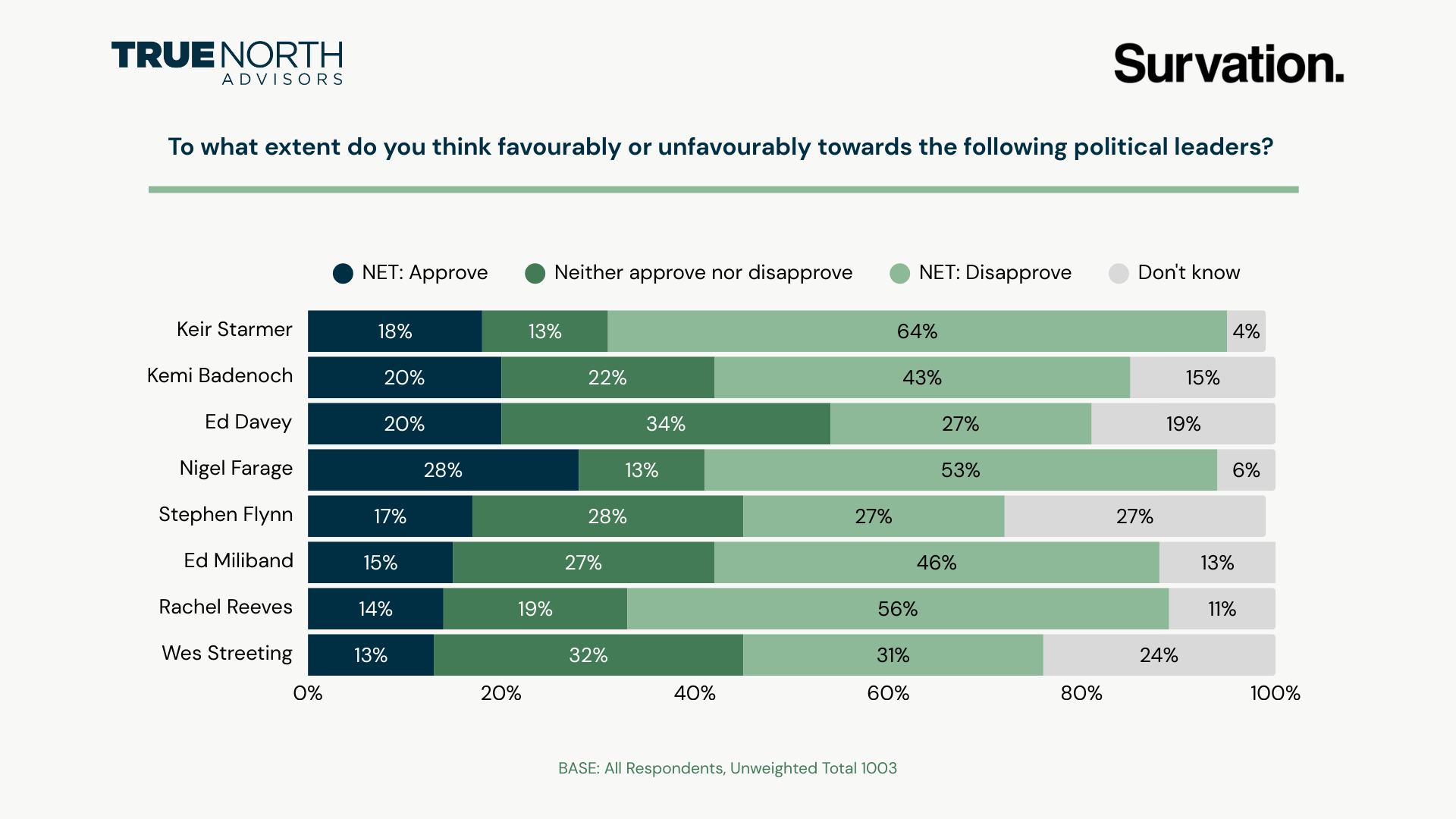
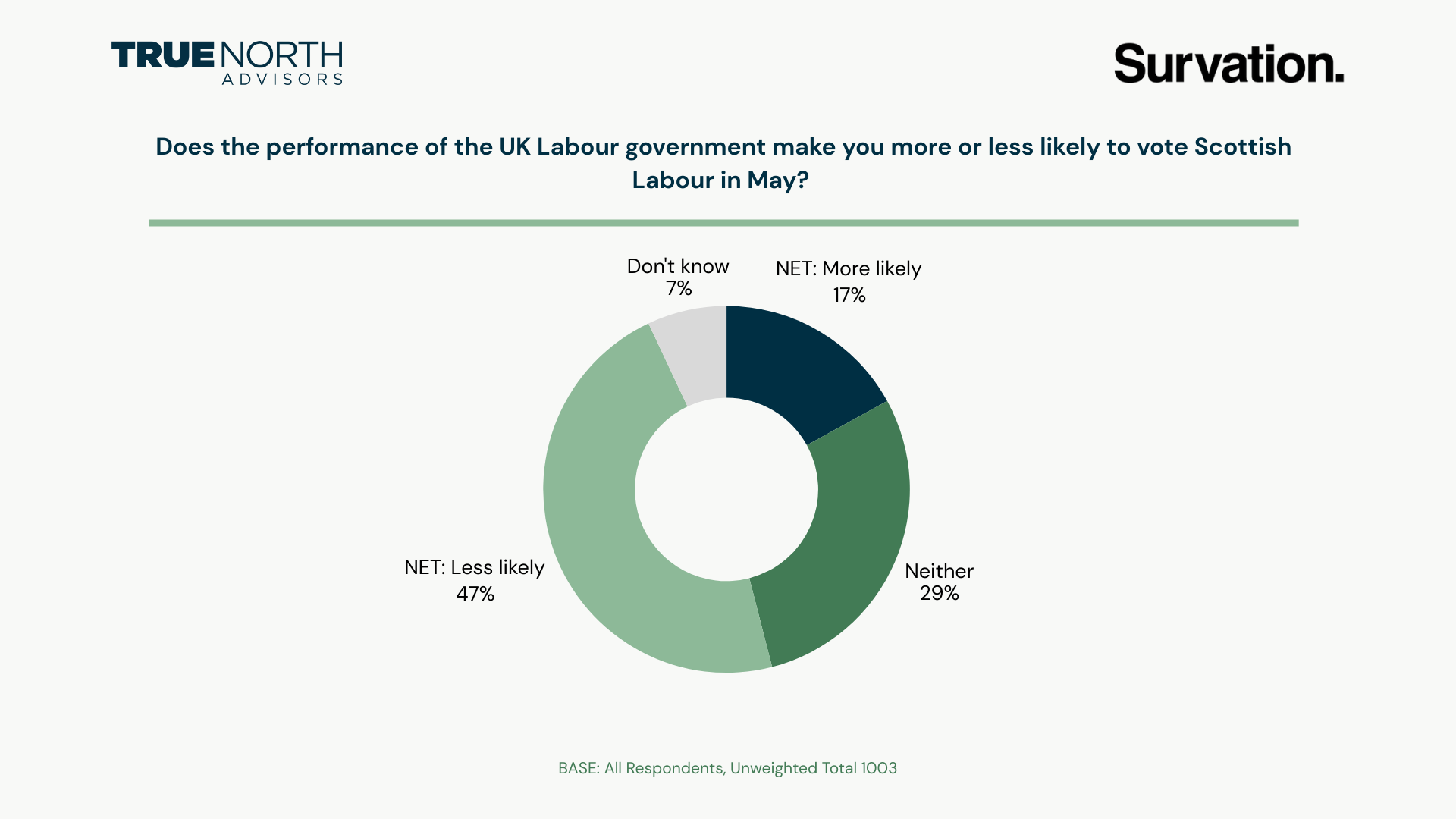
For Scottish Labour, this reflects a sharp decline from its mid-2023 highs, with almost half of voters saying the performance of the UK Labour government makes them less likely to back Anas Sarwar in May. Certainly, both Sir Keir Starmer and Rachel Reeves are by far the most unpopular politicians among Scottish voters, recording approval ratings of -46 and -43 respectively.
Meanwhile, the Conservatives have recovered modestly to 13 per cent, while the Liberal Democrats (11 per cent on the list) now sit ahead of the Greens (9 per cent).
Alongside the political numbers, the poll also highlights striking attitudes on energy and the North Sea. Almost 60 per cent of voters support extracting all remaining UK oil and gas reserves, with three-quarters saying the UK should meet as much of its oil and gas demand as possible from domestic production rather than imports. More than 60 per cent also believe North Sea operators have a positive impact on the UK economy - a significant finding amid ongoing debate over the Energy Profits Levy and investment decline.
In a week that also saw the unveiling of the Scottish Government budget, more than half of voters suggested the level of taxation in Scotland did not provide value for money for public services, while 42 per cent said the administration does not have the right policies in place to make Scotland a competitive place to do business.
Taken together and amid fragmented opposition and volatile voter loyalties, the next four months look set to be both pivotal and highly unpredictable.
Our expert advisors have worked at the very heart of Scottish and UK politics, including overseeing decisive election campaigns at Holyrood and Westminster. If you would like expert insight into how this crucial campaign will play out, or how the result will impact your business, please get in touch here.